Cutting org onboarding time by 28% with a 'less is more' strategy
As part of Jisr's Growth Squad, I optimized the organization onboarding process to boost team capacity, improve the experience, and accelerate time-to-value, reducing onboarding time by 28%.
Overview
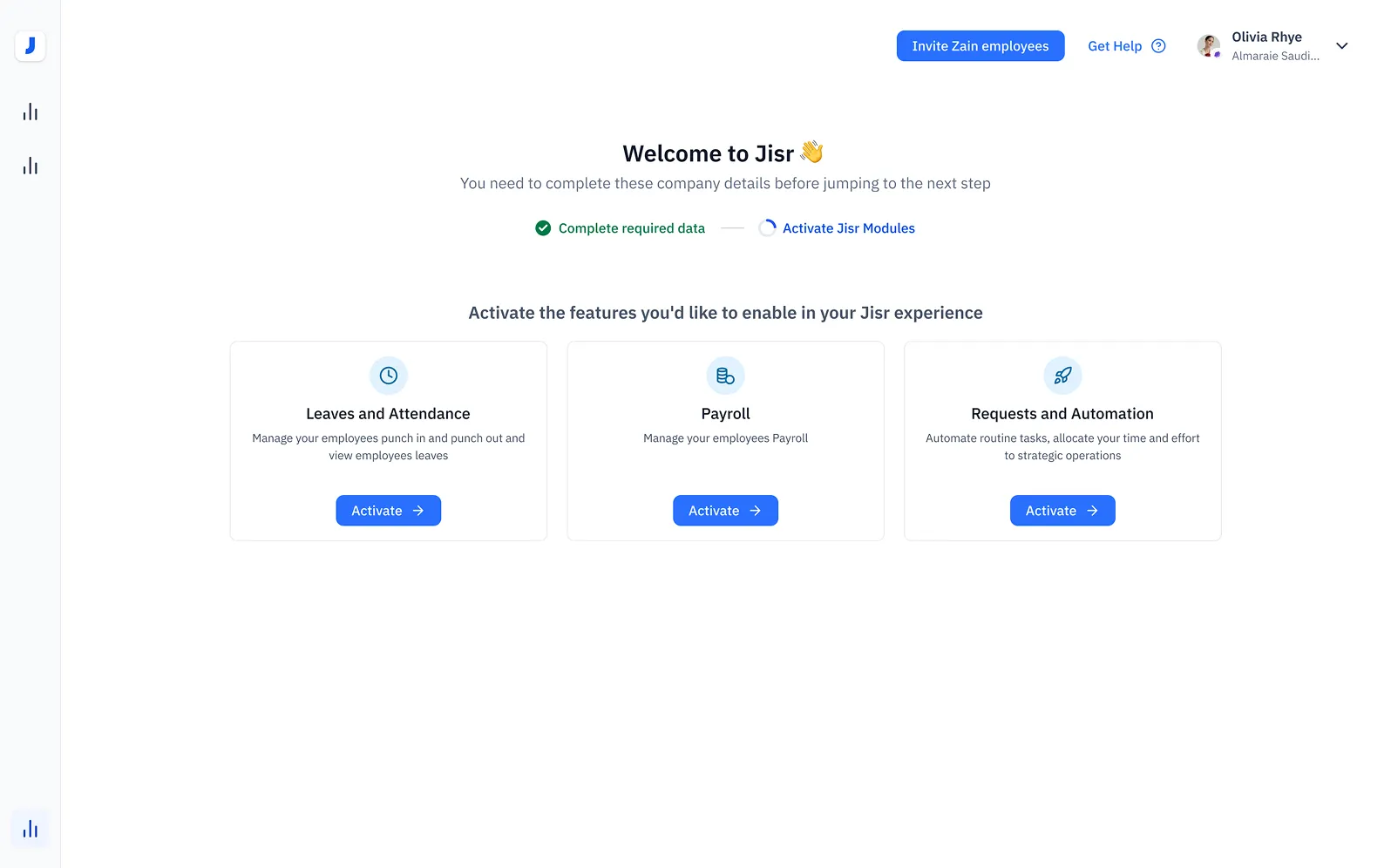
Jisr is Saudi Arabia's leading HR platform, covering payroll, attendance, performance, and more. As part of the Growth Squad, I optimized the onboarding process to boost team capacity, improve user experience, and accelerate time-to-value.
💡 This project is all about how I helped reduce Jisr's onboarding time by 28% through a simple "less is more" strategy.
Problem
Like many B2B platforms, Jisr faces a significant barrier to entry during the onboarding phase. Setting up the platform requires users to input a large amount of data across multiple modules, which can be time-consuming and overwhelming. On average, lower-tier users take 1 to 2 weeks to complete the setup, while higher-tier clients may require up to 2 months to fully onboard.
Research and discovery approach
To deeply understand the onboarding challenges, I used a combination of qualitative and evaluative research methods:
- Stakeholder interviews — I held around 20 hours of workshops with key stakeholders to map the onboarding journey and identify recurring issues from their direct customer insights.
- Shadowing the customer onboarding team — I observed weekly workshops and one-on-one meetings between the onboarding team and clients. This helped me identify common user questions, concerns, blockers, and how the team resolved them in real time.
- A deep UX audit — I audited the onboarding flow, leveraging my product design expertise and competitive benchmarks to uncover usability issues, friction points, and opportunities for automation and clarity.
Strategy & solution
When I was first assigned to this project, I happened to be reading Product-Led Growth — a well-regarded book on building products that drive adoption through the product experience itself. The ideas resonated deeply with the goals of this project, especially since one of Jisr's key OKRs was to become more product-led, particularly for smaller companies.
Inspired by the book, I crafted a simple, effective strategy to streamline onboarding:
- 🗑 Remove what can be removed
- ⏳ Postpone what can be postponed
- ✅ Keep only what truly needs to be kept
The strategy aimed to reduce time-to-value and motivate users to complete onboarding. After several discussions, we identified that the first key moment of value is when admins invite employees to join Jisr and start using the platform — so we wanted to shorten the path to that step.
Strategy & solution slider overview
Design mandates
Based on this strategy, I developed design mandates to steer the process:
Simplicity over complexity
- Minimize the use of user tips.
- Eliminate unnecessary content.
- Implement progressive disclosure to reveal information gradually.
- Reduce cognitive load by keeping things clear and straightforward.
Show, don't tell
- Prioritize visual elements over text for clearer communication.
- Provide templates wherever possible to streamline tasks.
- Use a guided onboarding experience (an immersive wizard) to lead users step by step.
Before & after
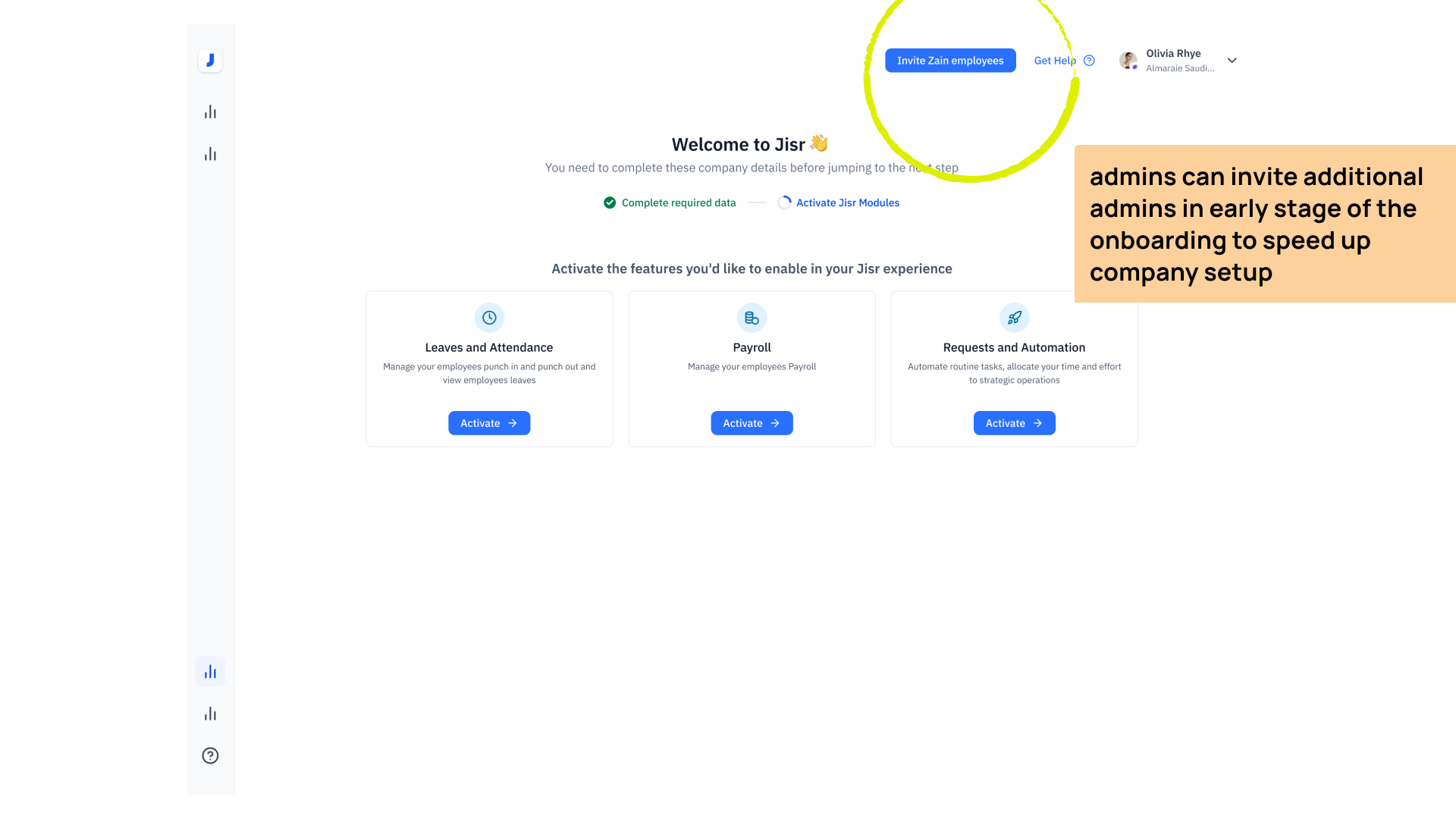
The specific problems in the old onboarding, and how I solved each one. Toggle between the issue and the fix.
Previously, only one admin was allowed to complete the onboarding process. The system didn't allow adding additional admins until after onboarding was complete, which slowed down the process and placed the entire burden on a single user.
🚧 I would love to give credit to my teammate Mohamed Agroudi, who contributed during the later stages — particularly in refining the UI and iterating toward the final polished version.
Thank you,
Amr