Redesigning AI CLX Assistant
I redesigned CLX's AI CLX Assistant is the most differentiated feature on the site, in this case study I will walk you through from a rigid 20+ question funnel into a guided, two-stage conversation that meets every customer where they are.
Context

CLX's AI System Builder and assitant is the most differentiated feature on the site, a conversational assistant that helps shoppers configure a custom gaming PC through chat.
The first iteration shipped in early 2024, when AI in e-commerce was still novel and LLMs were less forgiving than they are today. We learned a lot from the original version, two winning experiments came from it, and the full revamp is where I applied those learnings as the foundation, then redesigned the assistant end-to-end.
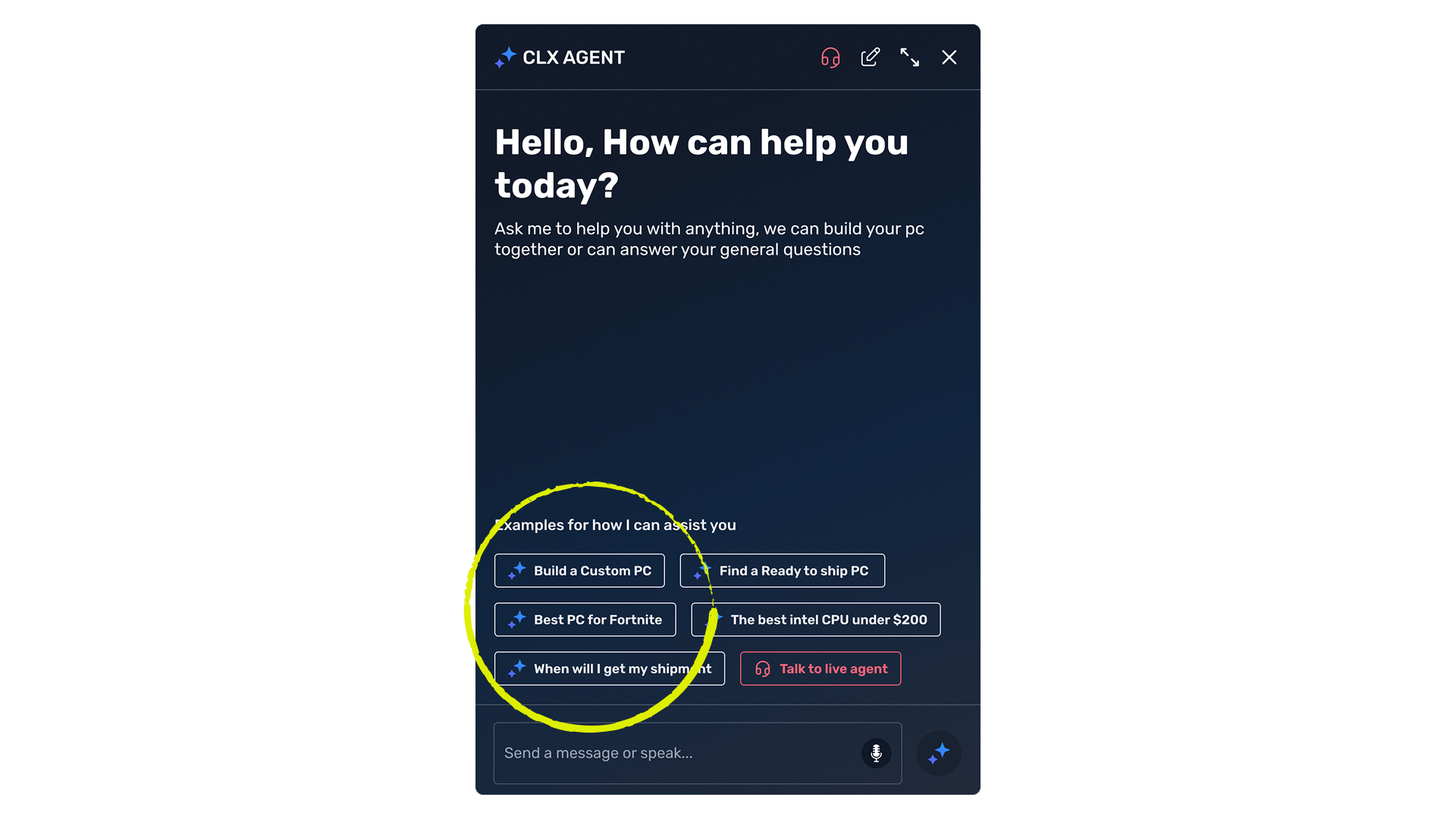
The goal: turn the AI from a PC-building chatbot into a real assistant that meets every CLX customer where they are, technical or not, pre-purchase or post.
Approach
The AI redesign followed the same evidence-led approach as the configurator. I watched session tons of recordings of real users to spot where conversations stalled, where people got confused, and where they dropped of . I ran a competitive review of leading chat experiences at the time, ChatGPT, Gemini, and other emerging AI products to learn what good AI conversation design looked like and which patterns we could borrow for e-commerce.
And I worked closely with the CLX team through multiple iteration cycles, each stress-tested against that combined input.
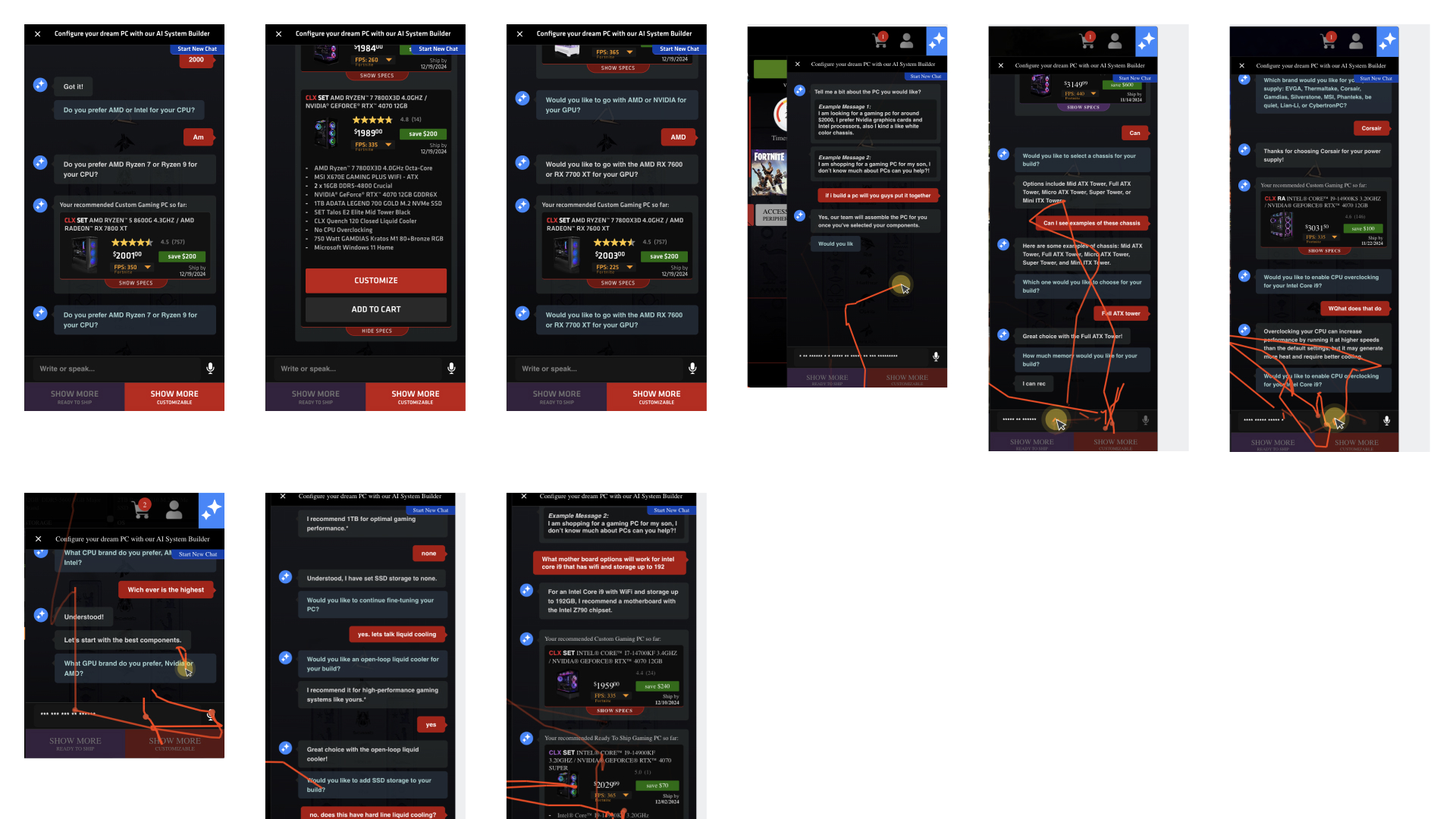
What was broken in the old AI Assitant and how I fixed it
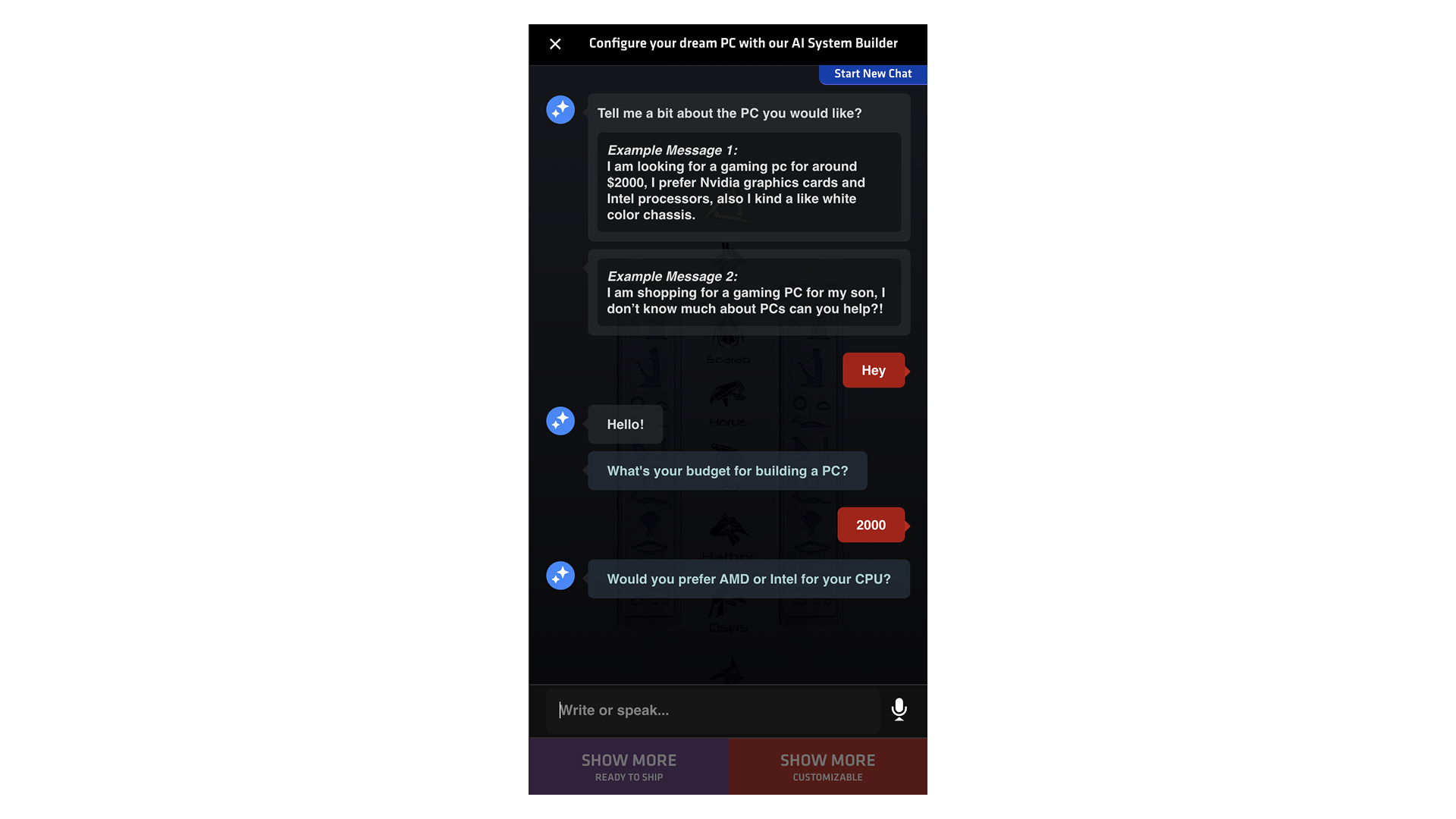
Users opened the chat and didn't know what to ask. AI in e-commerce was new, and there were no cues for how to use it.
Impact
The redesign, together with the experiments it built on, lifted conversion by up to +39% and revenue per user by up to +20%.
Takeaway
The first AI builder proved the idea worked. The revamp made it usable. Most of the wins didn't come from adding intelligence — they came from removing friction: better defaults, smaller decisions, the right question at the right time, and an honest acknowledgement that not every user wants to make every choice. The biggest unlock was the two-stage flow — a pattern I'll keep reaching for whenever a product asks users for more decisions than they actually have opinions on.